


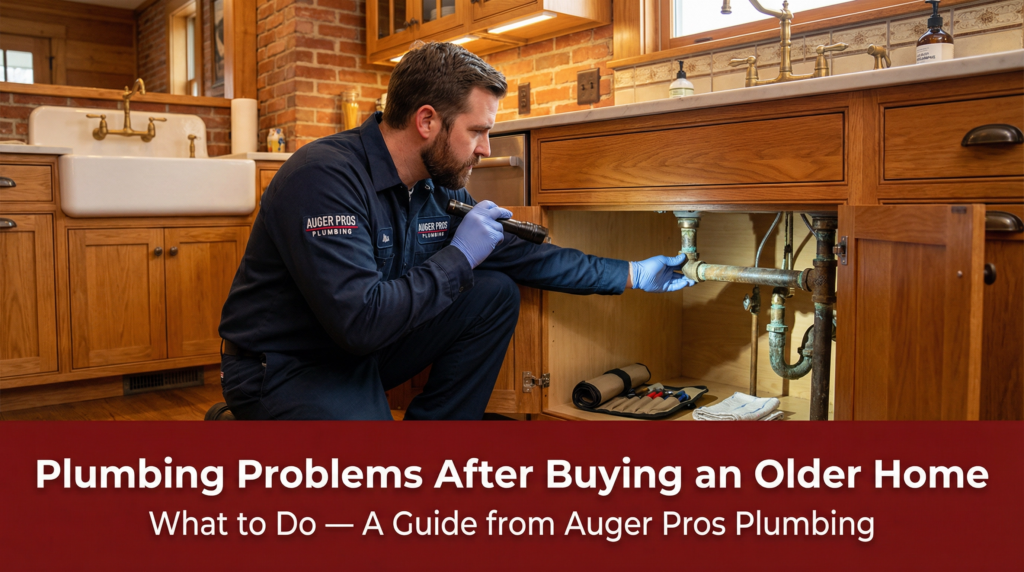

Congratulations on buying that charming older home! It has character, mature trees, and perhaps a wraparound porch that makes your heart sing. But beneath those gorgeous original hardwood floors, a sinister plot might be brewing in the form of decades-old plumbing. If you have started noticing strange gurgling sounds, mysterious damp spots, or water pressure that resembles a tired sigh, you are not alone. Dealing with plumbing problems after buying an older home is practically a rite of passage for vintage home enthusiasts.
At Auger Pros Plumbing, we have seen it all—from pipes that look like they belong in a museum to root intrusions that have set up a thriving underground ecosystem. Before you panic and start eyeing that beautiful clawfoot tub with suspicion, take a deep breath. Here is a comprehensive guide on what to look for and, more importantly, what to do when your historic dream home starts acting its age.
The Usual Suspects: Common Older Home Plumbing Issues
When you buy a house built before the 1980s (or even the 1990s), you inherit the plumbing standards of that era. While they might have been cutting-edge during the disco era, time and water are a destructive combination.
Galvanized Steel Pipes: The Rusty Culprit
If your home was built before the 1960s, there is a good chance it originally featured galvanized steel pipes. These pipes were coated with zinc to prevent rusting, but unfortunately, the zinc coating eventually wears off. Once that happens, the pipes begin to rust from the inside out. This leads to restricted water flow, low water pressure, and water that looks like rusty iced tea. If you notice a sudden drop in water pressure or discolored water, galvanized pipes might be the guilty party.
Cast Iron Drain Lines: The Crumbling Foundation
Cast iron was the gold standard for sewer and drain lines for decades. It is incredibly durable, but it is not immortal. After 50 to 75 years, cast iron pipes begin to deteriorate. They can rust, crack, and channel (where the bottom of the pipe simply rots away). This creates a perfect environment for frequent clogs, slow drains, and the dreaded sewer backup. If your older home has cast iron pipes, a thorough sewer camera inspection is essential to assess their condition.
Polybutylene Piping: The Ticking Time Bomb
If your home was built or remodeled between the late 1970s and the mid-1990s, you might be dealing with polybutylene (often called Poly-B) piping. This grayish plastic pipe was hailed as the plumbing material of the future because it was cheap and easy to install. Unfortunately, it reacts poorly with the chlorine found in municipal water supplies, becoming brittle and prone to sudden, catastrophic failure. If you have Poly-B pipes, the question is not if they will fail, but when.
Tree Root Intrusions: Nature’s Plumbing Wrecking Crew
Those beautiful, mature trees that made you fall in love with the property? Their roots are constantly searching for water, and your older, slightly leaky sewer line is an all-you-can-drink buffet. Roots can infiltrate tiny cracks in clay or cast iron pipes, growing inside until they completely block the line or shatter the pipe entirely.
Diagnostic Guide: What Is Going Wrong?
To help you identify the source of your vintage home’s plumbing woes, we have put together this handy diagnostic table.
| Symptom | Most Likely Cause | Recommended Action |
| Brown or rusty-looking water from faucets | Corroding galvanized steel pipes | Inspect exposed pipes; consider repiping |
| Consistently low water pressure throughout the house | Mineral buildup or rust inside older pipes | Have a professional evaluate the water lines |
| Frequent, stubborn drain clogs or gurgling toilets | Cast iron pipe deterioration or tree root intrusion | Schedule a sewer camera inspection |
| Sudden, unexplained water leaks behind walls | Brittle polybutylene pipes or failing joints | Turn off the main water valve immediately and call a plumber |
| Damp, foul-smelling patches in the yard | Broken or collapsed main sewer line | Request a main line assessment and leak location service |
Action Plan: What to Do Next
If you are experiencing plumbing problems after buying an older home, ignoring them will only lead to more extensive (and expensive) damage. Here is your step-by-step action plan to regain control of your plumbing system.
Step 1: Locate Your Main Water Shut-Off Valve
Before disaster strikes, find your main water shut-off valve. In older homes, this can sometimes be hidden in a crawlspace, basement, or utility closet. Knowing exactly where it is and how to turn it off can save your home from severe water damage if an aging pipe suddenly gives way.
Step 2: Schedule a Comprehensive Plumbing Inspection
Even if you had a general home inspection before purchasing, standard inspections often barely scratch the surface of plumbing systems. You need a specialized plumbing inspection. At Auger Pros Plumbing, our expert technicians can perform a deep dive into your home’s plumbing health. This includes checking the water pressure, inspecting visible pipes, evaluating the water heater, and most importantly, performing a sewer camera inspection to see the exact condition of your underground lines.
Step 3: Prioritize Repairs and Replacements
Once you have a clear picture of your plumbing system’s health, it is time to prioritize. If you have polybutylene pipes or heavily corroded galvanized lines, a whole-home repipe might be the most secure long-term solution. If your cast iron sewer line is failing, we can discuss options like traditional replacement or less invasive trenchless repair methods, depending on the situation.
Step 4: Consider Preventative Maintenance
Older plumbing systems need a little extra TLC. Regular maintenance can prevent minor issues from becoming major disasters. Consider signing up for our VIP Membership! For just $240 a year, you receive priority scheduling, annual plumbing evaluations, and exclusive discounts. It is the perfect way to keep a watchful eye on your older home’s plumbing without the stress.
Don’t Let Old Pipes Ruin Your New Home
Buying an older home is an adventure, but dealing with plumbing problems does not have to be a nightmare. The key is to be proactive, understand what you are dealing with, and partner with a plumbing team that knows how to handle vintage systems with modern expertise.
If your older home is showing signs of plumbing distress, do not wait for a catastrophic failure. The team at Auger Pros Plumbing is here to help you navigate the quirks of historic plumbing. We offer free estimates and flexible financing options, including 6 months at 0% interest through Synchrony, to make necessary upgrades manageable.
Ready to get your older home’s plumbing up to speed? Call Auger Pros Plumbing today to schedule your comprehensive evaluation. We proudly serve our official service areas with top-tier, reliable plumbing solutions. Let us handle the pipes so you can get back to enjoying your beautiful, character-filled home!
Frequently Asked Questions (People Also Ask)
Should I replace all the plumbing in an old house? Not necessarily, but it depends on the materials used and their current condition. If your home has polybutylene or heavily corroded galvanized steel pipes, a full replacement is highly recommended to prevent severe water damage. A professional inspection can determine what needs replacing and what can be safely maintained.
How do I know if my old cast iron pipes are bad? Signs of failing cast iron pipes include frequent backups, slow drains, gurgling sounds from toilets, foul odors in your home or yard, and unexplained damp spots. A sewer camera inspection is the most accurate way to assess the internal condition of cast iron lines.
Does home insurance cover old plumbing? Most standard homeowners insurance policies cover sudden and accidental water damage (like a burst pipe), but they typically do not cover the cost of replacing the plumbing system itself if it failed due to age, wear and tear, or lack of maintenance. Always review your specific policy details.
Can I get financing for major plumbing repairs? Yes! Auger Pros Plumbing offers excellent financing options, including a promotional offer of 6 months at 0% interest through Synchrony, making it easier to afford necessary plumbing upgrades for your older home.