
Let’s be honest: nobody wakes up in the morning, stretches, and thinks, “Wow, I really hope I get to think about my sewer lines today!” Unless you’re one of us here at Auger Pros Plumbing, your sewer line is probably the ultimate “out of sight, out of mind” feature of your home.
But when things go wrong — when drains slow down to a crawl, when weird gurgling noises start echoing from your toilet, or when you catch a smell that definitely isn’t your neighbor’s barbecue — your sewer line suddenly demands your full attention. That’s when one of the most powerful tools in modern plumbing steps up: the sewer camera inspection.
So, what exactly is a sewer camera inspection, how does it work, and why should you care? Grab a cup of coffee (or maybe wait until after you read this), and let’s dive into the fascinating, sometimes gross, but incredibly important world of underground plumbing diagnostics.
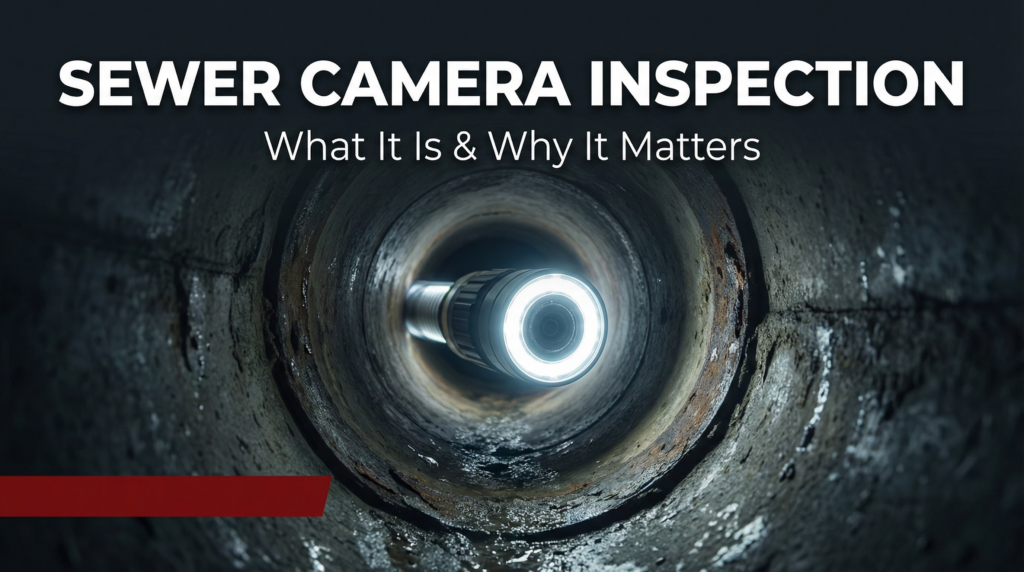
A sewer camera inspection — also called a sewer scope inspection or video pipe inspection — is a minimally invasive diagnostic procedure where a specialized, waterproof video camera is fed through your home’s plumbing system. Attached to a flexible, high-strength cable, this camera acts as our eyes underground, delivering a real-time, high-definition view of the inside of your pipes.
Think of it as a colonoscopy for your house. (Yes, we went there. You’re welcome.)
Instead of guessing what’s causing a blockage or blindly digging up your beautiful front lawn to find a broken pipe, our licensed plumbers can pinpoint the exact location and nature of the problem from a monitor above ground. It takes the guesswork out of plumbing diagnostics entirely, saving you time, money, and a whole lot of landscaping heartbreak.
The technology is impressive, and the process is surprisingly straightforward. Here’s what happens when Auger Pros Plumbing arrives for a sewer camera inspection:
Step 1 — Accessing the Line
We locate the best access point, which is typically your main sewer line cleanout — a capped pipe usually found in the yard, garage, or crawlspace. If a cleanout isn’t accessible, we may go through a roof vent stack or, in some cases, remove a toilet to gain entry.
Step 2 — Sending in the Camera
We feed the high-resolution, waterproof camera head into the pipe. The flexible cable allows the camera to navigate the bends, slopes, and joints of your plumbing system without any digging or damage to your property.
Step 3 — The Live Video Feed
As the camera travels through your sewer line, it transmits a live video feed back to a monitor. Our technicians watch carefully, noting the pipe material, condition, and any problem areas they observe along the way.
Step 4 — Pinpointing the Problem
The camera head is equipped with a radio transmitter. When we spot an issue, we use a locating device above ground to identify the exact depth and position of the camera underground. This precision means that if excavation is ever required, we know exactly where to dig — no guesswork, no unnecessary destruction.
The entire process is non-invasive, efficient, and gives both you and our technicians a clear, documented picture of your sewer line’s condition.
You’d be amazed at what hides inside residential sewer lines. A sewer camera inspection is highly effective at identifying several of the most common — and costly — plumbing problems:
| Problem | What It Looks Like on Camera | Why It Matters |
| Tree Root Intrusions | Hair-like tendrils or thick root masses blocking the pipe | Roots exploit tiny cracks and grow rapidly, eventually causing complete blockages or pipe failure |
| Pipe Bellies (Sags) | A low spot where water pools instead of flowing | Causes chronic slow drains and recurring backups as waste accumulates |
| Cracked or Broken Pipes | Visible fractures, gaps, or collapsed sections | Allows soil and groundwater infiltration; can lead to sinkholes or foundation issues |
| Grease and Debris Buildup | Thick coating on pipe walls narrowing the flow channel | Restricts flow and creates a surface for roots and debris to catch on |
| Corrosion | Flaking, pitting, or deteriorating pipe walls | Common in older cast iron pipes; weakens the line and leads to leaks or collapse |
| Offset or Misaligned Joints | Gaps or mismatched sections at pipe connections | Creates a ledge that catches waste and debris, leading to blockages |
Here’s something important that not every plumber will tell you: a sewer camera alone cannot definitively locate a leak. Because the camera is inside the pipe looking at the interior walls, it cannot see whether water is actually escaping through a crack into the surrounding soil. A camera can show us a suspicious area, but it cannot confirm active leakage.
To properly diagnose a sewer leak — particularly an under-slab leak — we use the camera in combination with hydrostatic pressure testing and leak isolation procedures. This multi-tool approach is the gold standard for accurate diagnostics, and it’s the approach Auger Pros Plumbing uses to make sure we never recommend a repair you don’t actually need.
You don’t need to inspect your sewer line every Tuesday, but there are several scenarios where scheduling a camera inspection is one of the smartest plumbing decisions you can make:
You’re Buying a New Home. A standard home inspection doesn’t include underground sewer lines. Inheriting a cracked, root-infested, or partially collapsed sewer line right after closing can cost you thousands of dollars — money you didn’t budget for and didn’t see coming. A sewer scope inspection before you buy is a small investment with potentially enormous returns.
You Have Frequent or Recurring Backups. If your toilets are backing up regularly, your drains are chronically slow, or you’ve had a plumber snake the line more than once without a lasting fix, the problem likely goes deeper than a simple clog. A camera inspection reveals the underlying cause so you can address it properly.
You Notice Unusually Lush or Wet Patches in Your Yard. If one section of your lawn is inexplicably greener, softer, or wetter than the rest — and it smells a bit off — there’s a reasonable chance your sewer line is leaking underground and fertilizing your grass. (Not the kind of lawn care tip you were hoping for, we know.)
Your Home Is Older Than 30 Years. Older homes often have cast iron or clay sewer pipes that have been quietly deteriorating for decades. A camera inspection gives you a clear picture of where things stand before a small problem becomes a catastrophic one.
Before a Major Addition or Remodel. Adding a bathroom, finishing a basement, or significantly increasing your home’s plumbing load? Make sure your existing main sewer line is in good enough shape to handle the extra volume before you invest in the remodel.
At Auger Pros Plumbing, we believe in transparency, honesty, and doing the job right the first time — every time. We don’t just shove a camera down a pipe and hand you a vague report and a big bill.
When we perform a sewer camera inspection, we walk you through the video feed in plain language. We explain what you’re seeing, identify any issues, and give you clear, honest recommendations. If your pipes look great? We’ll be the first to deliver the good news. If there’s a problem, we’ll tell you exactly what it is, what caused it, and what your options are to fix it.
We also know that unexpected plumbing repairs can be stressful on the wallet. That’s why Auger Pros offers flexible financing options, including 6 months at 0% interest, so you can address issues without the financial shock. And if you’re already a VIP Member, you’re getting priority service and exclusive benefits that make owning a home a little less stressful.
How long does a sewer camera inspection take?
Most residential sewer camera inspections take between 30 minutes and one hour, depending on the length of the line and what we find along the way.
Does a sewer camera inspection require digging?
No. That’s one of the biggest advantages. The camera is inserted through an existing cleanout or access point, so there is no digging, no demolition, and no disruption to your yard or landscaping.
How much does a sewer camera inspection cost?
Costs vary based on the length of the line and the complexity of the inspection. The investment is almost always far less than the cost of discovering a major sewer problem after it has already caused significant damage.
Can I watch the inspection myself?
Absolutely. In fact, we encourage it. Watching the live feed with your technician gives you a firsthand look at your sewer line’s condition and helps you make informed decisions about any recommended repairs.
Do I need a sewer camera inspection if my drains seem fine?
If your drains are working well and you have no symptoms, a routine inspection isn’t urgent. However, if your home is older, you’re buying or selling, or you just want peace of mind, a periodic inspection is never a bad idea.
Don’t let a hidden plumbing problem turn into a five-figure emergency. If you’re experiencing drain issues, buying a home, or simply want to know the true condition of your sewer line, Auger Pros Plumbing is ready to help.
We serve homeowners and businesses throughout the DFW area with licensed, professional plumbing services you can trust. Call us today or schedule online — and let us take a look under the slab so you can get back to not thinking about your sewer line. That’s exactly how it should be.
Auger Pros Plumbing serves the Dallas-Fort Worth area with residential and commercial plumbing services including sewer camera inspections, sewer line repair, hydrostatic testing, water heater installation, water filtration, and more. Financing available through Synchrony.